AI-Powered Monitoring for Physical Security Systems: What It Actually Means
Blog
•
6 minute read
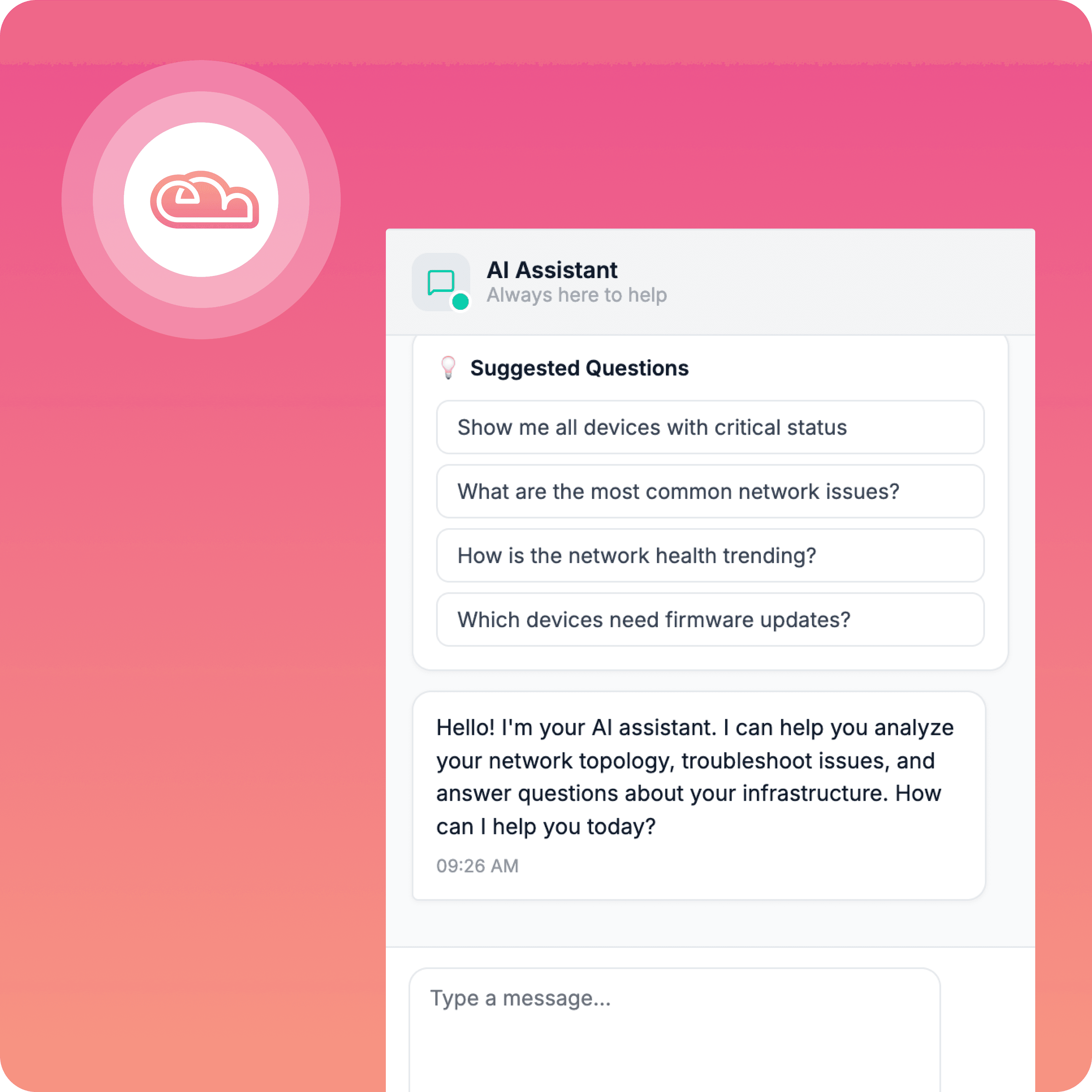
What It Actually Means
AI gets thrown around a lot in physical security.
Most of the time, it sounds powerful, but it is not clear what it actually does day to day or how it helps someone running a real system.
So let’s make it concrete.
When AI-powered monitoring is done right, it is not just about alerts or automation. It is about turning a complex system into something you can actually understand, prioritize, and act on.
From Raw Data to Real Insight
Every physical security system is constantly generating data.
Cameras are streaming. Networks are passing traffic. VMS platforms are recording. Devices are logging events.
The problem has never been a lack of data. It has been a lack of clarity.
AI changes how that data gets interpreted.
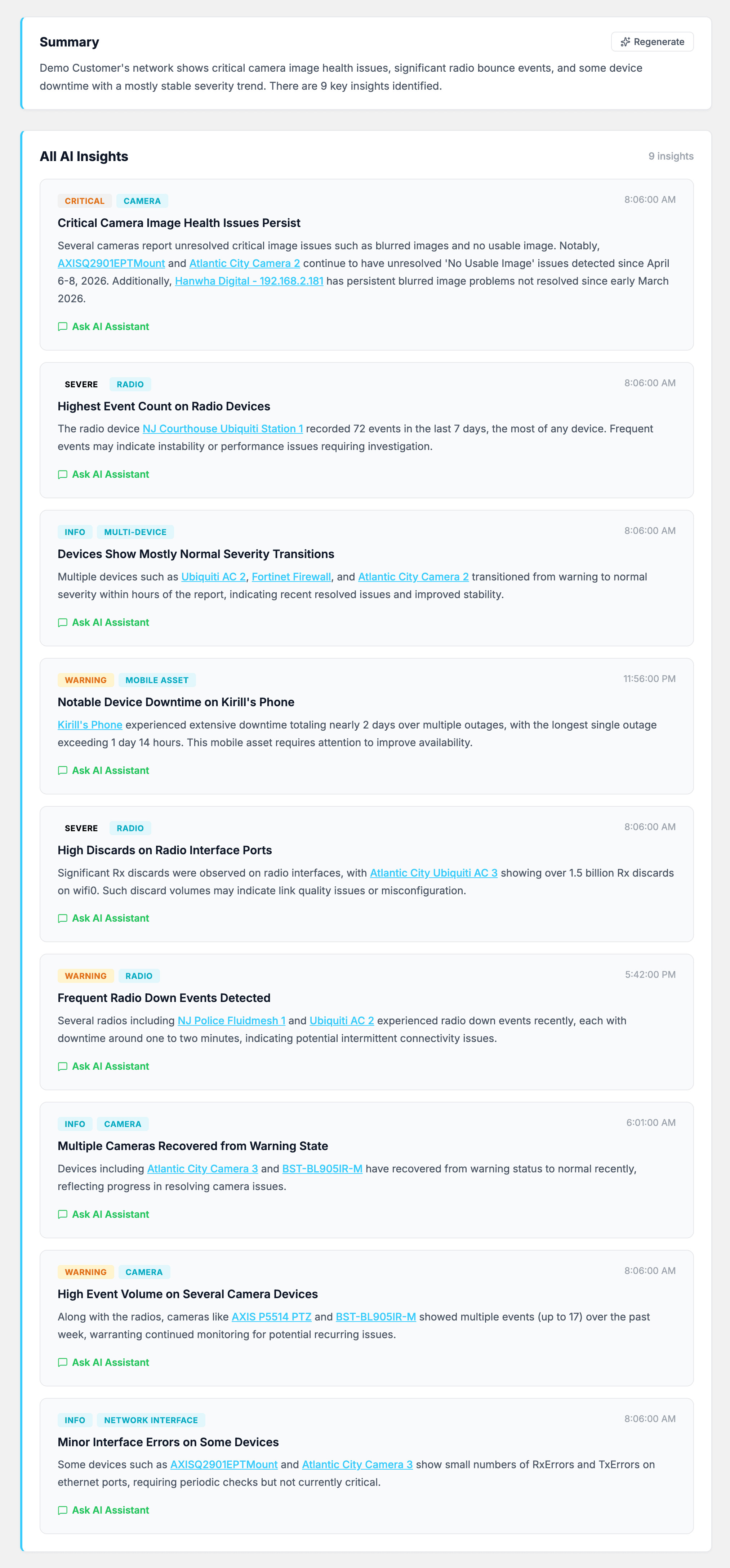
Instead of digging through logs and disconnected dashboards, you get a clear summary of what is happening across your system. What is critical. What has been unresolved. What actually needs attention.
It starts to feel less like monitoring and more like a daily operational briefing.
Understanding What Is Actually Going Wrong
One of the biggest gaps in traditional monitoring is context.
A single alert does not tell you much. But when you connect signals across cameras, network, and infrastructure, the picture changes.
You start to see patterns.
Multiple cameras with ongoing image issues.
Devices that recovered after instability.
Locations where problems are repeating.
This is not just alerting. It is understanding.
You are no longer asking what happened. You are starting to understand why.
Moving Beyond Online vs Offline
Most tools reduce everything to simple states.
Online or offline.
Up or down.
But real systems do not fail that cleanly.
A camera can be online and still unusable.
A radio can be connected but unstable.
A device can look healthy while trending toward failure.
AI-powered monitoring surfaces what is actually happening.
You can see cameras with blurred or obstructed images that have gone unresolved for days. You can identify radios generating abnormal event volume that points to instability. You can catch network interfaces showing high discards before they become outages.
These are the problems that matter. And they are usually invisible in traditional tools.
Prioritizing What Actually Matters
In any real environment, there are always more alerts than time.
The challenge is knowing what to focus on.
AI helps organize issues based on severity, persistence, and impact.
Critical issues rise to the top.
Ongoing problems become visible.
Lower priority items stay tracked without getting in the way.
Instead of a noisy stream of alerts, you get structured insight.
That shift makes a big difference.
You are no longer reacting to everything. You are focusing on what actually needs attention.
Seeing Trends, Not Just Events
Most monitoring tools show you what just happened.
AI helps you understand what is developing.
You can see devices that have experienced repeated downtime. Cameras that have been degraded for days. Network segments that are slowly becoming unstable.
These are trends, not isolated events.
And most real problems show up as trends long before they show up as failures.
This is where AI becomes valuable.
It helps you act earlier.
A More Natural Way to Interact with Your System
Another shift is how people interact with the platform.
Instead of navigating dashboards, you can simply ask questions.
Show me devices with critical status.
What issues are most common right now?
Which devices need attention first?
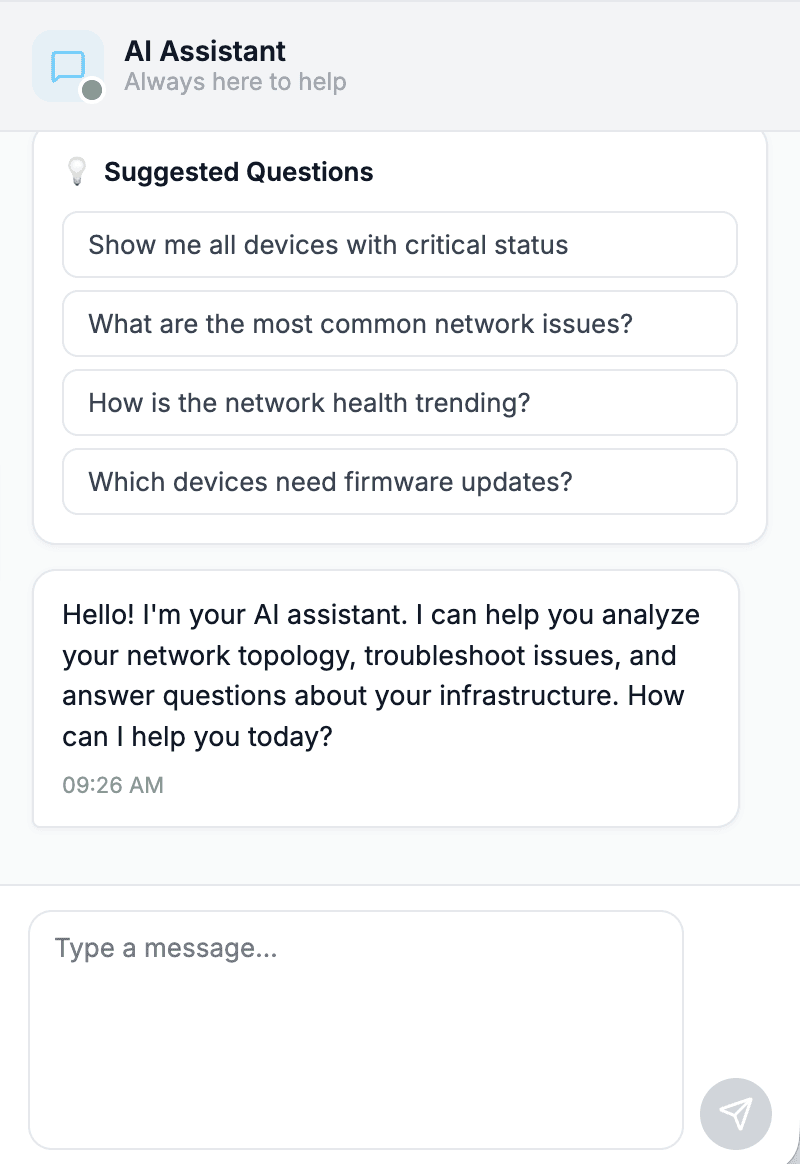
The system responds with clear, contextual answers based on what is actually happening.
This reduces friction and speeds up decision making.
What This Unlocks
When all of this comes together, the impact is straightforward.
You spend less time digging and more time resolving.
You catch issues earlier.
You understand root cause faster.
For distributed environments, this is critical.
You need to know what is happening across your system without guessing.
AI-powered monitoring gives you that clarity.
Final Thought
AI should not make monitoring more complicated.
It should make it easier to understand what is happening and what to do next.
Not more data.
Better decisions.
That is what AI-powered monitoring should actually deliver.
What It Actually Means
AI gets thrown around a lot in physical security.
Most of the time, it sounds powerful, but it is not clear what it actually does day to day or how it helps someone running a real system.
So let’s make it concrete.
When AI-powered monitoring is done right, it is not just about alerts or automation. It is about turning a complex system into something you can actually understand, prioritize, and act on.
From Raw Data to Real Insight
Every physical security system is constantly generating data.
Cameras are streaming. Networks are passing traffic. VMS platforms are recording. Devices are logging events.
The problem has never been a lack of data. It has been a lack of clarity.
AI changes how that data gets interpreted.
Instead of digging through logs and disconnected dashboards, you get a clear summary of what is happening across your system. What is critical. What has been unresolved. What actually needs attention.
It starts to feel less like monitoring and more like a daily operational briefing.
Understanding What Is Actually Going Wrong
One of the biggest gaps in traditional monitoring is context.
A single alert does not tell you much. But when you connect signals across cameras, network, and infrastructure, the picture changes.
You start to see patterns.
Multiple cameras with ongoing image issues.
Devices that recovered after instability.
Locations where problems are repeating.
This is not just alerting. It is understanding.
You are no longer asking what happened. You are starting to understand why.
Moving Beyond Online vs Offline
Most tools reduce everything to simple states.
Online or offline.
Up or down.
But real systems do not fail that cleanly.
A camera can be online and still unusable.
A radio can be connected but unstable.
A device can look healthy while trending toward failure.
AI-powered monitoring surfaces what is actually happening.
You can see cameras with blurred or obstructed images that have gone unresolved for days. You can identify radios generating abnormal event volume that points to instability. You can catch network interfaces showing high discards before they become outages.
These are the problems that matter. And they are usually invisible in traditional tools.
Prioritizing What Actually Matters
In any real environment, there are always more alerts than time.
The challenge is knowing what to focus on.
AI helps organize issues based on severity, persistence, and impact.
Critical issues rise to the top.
Ongoing problems become visible.
Lower priority items stay tracked without getting in the way.
Instead of a noisy stream of alerts, you get structured insight.
That shift makes a big difference.
You are no longer reacting to everything. You are focusing on what actually needs attention.
Seeing Trends, Not Just Events
Most monitoring tools show you what just happened.
AI helps you understand what is developing.
You can see devices that have experienced repeated downtime. Cameras that have been degraded for days. Network segments that are slowly becoming unstable.
These are trends, not isolated events.
And most real problems show up as trends long before they show up as failures.
This is where AI becomes valuable.
It helps you act earlier.
A More Natural Way to Interact with Your System
Another shift is how people interact with the platform.
Instead of navigating dashboards, you can simply ask questions.
Show me devices with critical status.
What issues are most common right now?
Which devices need attention first?
The system responds with clear, contextual answers based on what is actually happening.
This reduces friction and speeds up decision making.
What This Unlocks
When all of this comes together, the impact is straightforward.
You spend less time digging and more time resolving.
You catch issues earlier.
You understand root cause faster.
For distributed environments, this is critical.
You need to know what is happening across your system without guessing.
AI-powered monitoring gives you that clarity.
Final Thought
AI should not make monitoring more complicated.
It should make it easier to understand what is happening and what to do next.
Not more data.
Better decisions.
That is what AI-powered monitoring should actually deliver.
See EyeOTmonitor in Action
Get real-time visibility into your entire security system. Walk through the platform with our team and see how it fits your environment.
Image Health
Infrastructure Monitoring
Discovery & Mapping
Analytics
Integrations
Resources
Get Started
Pricing
© 2026 by EyeOTmonitor

See EyeOTmonitor in Action
Get real-time visibility into your entire security system. Walk through the platform with our team and see how it fits your environment.
Image Health
Infrastructure Monitoring
Discovery & Mapping
Analytics
Integrations
Resources
Get Started
Pricing
© 2026 by EyeOTmonitor
See EyeOTmonitor in Action
Get real-time visibility into your entire security system. Walk through the platform with our team and see how it fits your environment.
Image Health
Infrastructure Monitoring
Discovery & Mapping
Analytics
Solutions
By Role
Regional ISPs
Systems Integrators
MSPs
Integrations
Resources
Get Started
Pricing
© 2026 by EyeOTmonitor