Camera Image Health vs. Uptime: Why Green Lights Hide Real Problems
Blog
•
6 minute read
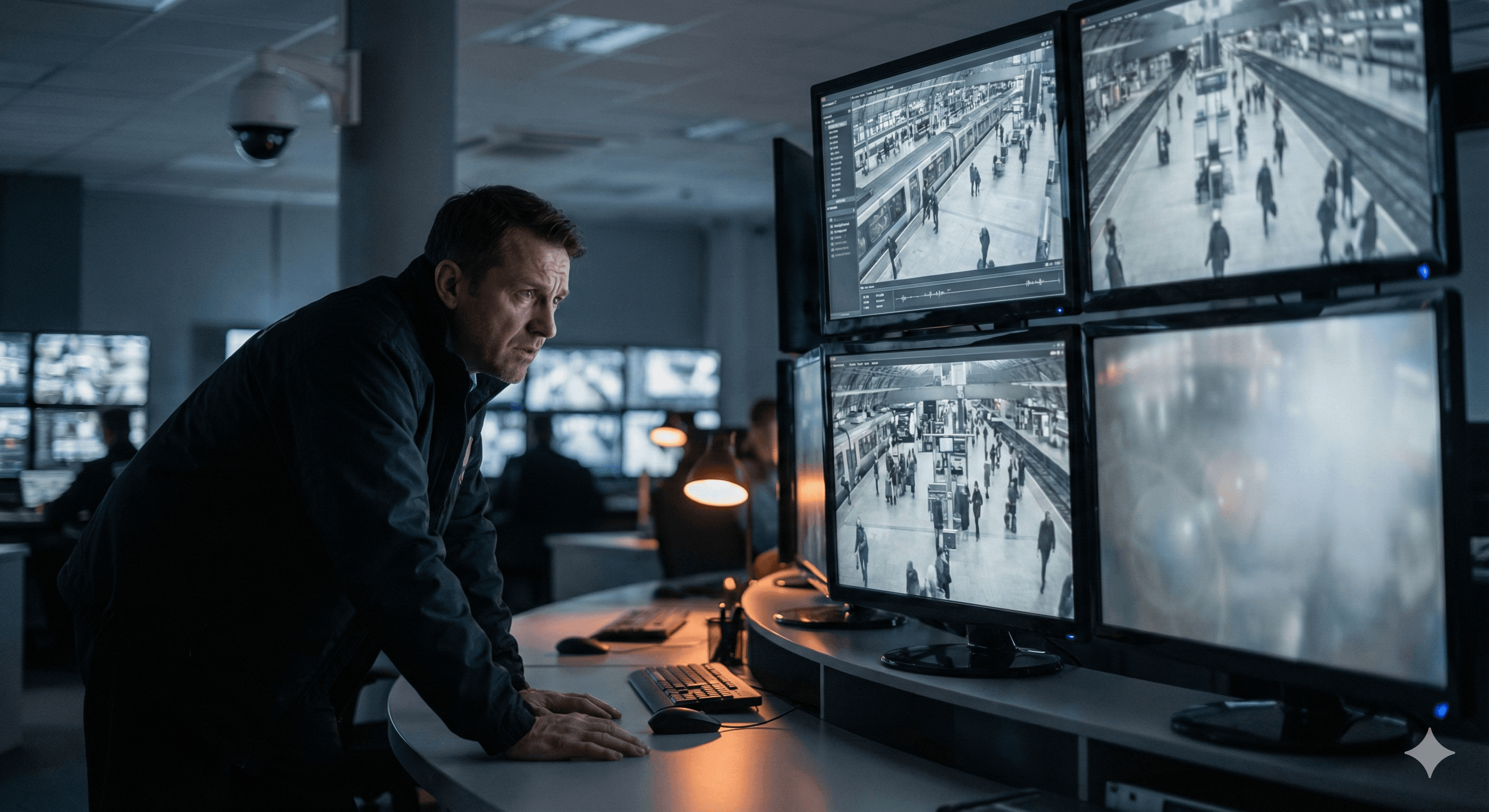
For years, security teams, integrators, and infrastructure operators have relied on a simple signal to judge camera performance: is the camera online or offline? If the system shows a green status indicator, the assumption is that the camera is working as expected.
But in modern video environments, that assumption is increasingly wrong.
Across transportation systems, smart cities, and critical infrastructure, cameras can remain technically “online” while delivering unusable video, missing recordings, or degraded images that undermine safety, investigations, and compliance. Uptime alone no longer reflects whether a camera can actually do its job.
This is where camera image health becomes critical.
The Problem With Uptime-Only Monitoring
Traditional camera monitoring focuses on connectivity. If a device responds to a ping or appears in the VMS, it’s considered operational. In reality, many of the most damaging camera failures occur after a camera comes online.
Common examples include:
- Blurry or out-of-focus images caused by vibration or tampering
- Obstructed views from snow, dust, foliage, or construction
- Overexposed or underexposed scenes due to lighting changes
- Recording failures despite the camera being reachable
- Network degradation that impacts video quality without dropping the connection
In all of these cases, the system may still show a healthy status, even though the video is no longer reliable.
For distributed environments like transit corridors, municipal camera networks, or unmanned utility sites, these failures can go unnoticed for days or weeks.
What Camera Image Health Actually Means
Camera image health goes beyond whether a device is online. It answers a more important question:
Is this camera producing usable video right now?
Image health evaluates the quality and integrity of the video itself, including:
- Focus and clarity
- Scene visibility
- Lighting consistency
- Obstructions and environmental interference
- Changes from a known good reference image
When image health is continuously validated, teams can identify problems long before they surface during an incident review or audit.
Why This Matters in Transportation Environments
Transportation organizations operate some of the most complex camera environments in the world. Public transit agencies, rail operators, airports, and departments of transportation rely on cameras across vehicles, stations, depots, roadways, and remote facilities.
In these environments:
- Cameras may be online but misaligned due to vibration
- Weather conditions can degrade image quality without causing outages
- Network congestion can affect video streams without triggering alerts
- Recording gaps can occur without obvious system failures
When an incident occurs, discovering that video is blurry, obstructed, or missing is not just inconvenient. It can directly impact safety reviews, investigations, and regulatory compliance.
Camera image health provides transportation teams with confidence that cameras are not just connected, but actually capturing usable evidence.
Smart Cities Face the Same Challenge at a Larger Scale
Smart city deployments amplify the problem. Municipal governments and public safety teams often manage thousands of cameras across traffic systems, public spaces, and critical facilities.
At this scale:
- Manual camera checks are impossible
- Uptime dashboards create false confidence
- Image degradation spreads unnoticed across neighborhoods
- Responsibility for cameras, networks, and VMS platforms is often fragmented
Without image health monitoring, cities may only discover camera failures after a citizen complaint, a media request, or a post-incident review.
By continuously validating image quality and recording status, cities gain real-time visibility into which cameras are truly operational and where intervention is needed.
Critical Infrastructure Can’t Afford Blind Spots
For critical infrastructure operators such as utilities, water authorities, and energy providers, camera failures carry even greater risk. Many sites are remote, unmanned, or high-security, and cameras play a central role in situational awareness.
In these environments:
- A camera can be online but pointed at the wrong area
- Environmental buildup can slowly obscure critical views
- Network degradation can silently impact video delivery
- Recording issues may only surface during an investigation
Camera image health allows operators to determine whether an issue originates with the camera, the image, the network path, or the VMS, and respond before risk escalates.
Why Image Health Must Be Continuous
One of the biggest misconceptions about camera performance is that image quality only needs to be verified during installation or maintenance. In reality, camera environments are constantly changing.
Lighting shifts, weather events, construction, vibration, and network conditions all impact image quality over time. A camera that produced perfect video last week may be compromised today.
That’s why image health must be:
- Continuous, not periodic
- Automated, not manual
- Context-aware, not isolated
Without this approach, uptime monitoring becomes a checkbox exercise rather than a true indicator of operational readiness.
Moving Beyond Green Lights
Uptime will always matter. If a camera is offline, it clearly isn’t working. But in modern security and infrastructure environments, uptime is only the starting point.
Camera image health reveals what uptime alone cannot: whether video systems are actually delivering the visibility, evidence, and confidence they’re expected to provide.
For organizations responsible for public safety, transportation, or critical infrastructure, that difference matters.
Looking Ahead
As camera environments continue to grow in scale and complexity, the industry is shifting from simple availability checks to holistic camera health monitoring. Image health, recording awareness, and infrastructure context are becoming essential to maintaining trust in video systems.
In future posts, we’ll explore how image health connects to access control events, network performance, and investigation workflows across different environments.
For years, security teams, integrators, and infrastructure operators have relied on a simple signal to judge camera performance: is the camera online or offline? If the system shows a green status indicator, the assumption is that the camera is working as expected.
But in modern video environments, that assumption is increasingly wrong.
Across transportation systems, smart cities, and critical infrastructure, cameras can remain technically “online” while delivering unusable video, missing recordings, or degraded images that undermine safety, investigations, and compliance. Uptime alone no longer reflects whether a camera can actually do its job.
This is where camera image health becomes critical.
The Problem With Uptime-Only Monitoring
Traditional camera monitoring focuses on connectivity. If a device responds to a ping or appears in the VMS, it’s considered operational. In reality, many of the most damaging camera failures occur after a camera comes online.
Common examples include:
- Blurry or out-of-focus images caused by vibration or tampering
- Obstructed views from snow, dust, foliage, or construction
- Overexposed or underexposed scenes due to lighting changes
- Recording failures despite the camera being reachable
- Network degradation that impacts video quality without dropping the connection
In all of these cases, the system may still show a healthy status, even though the video is no longer reliable.
For distributed environments like transit corridors, municipal camera networks, or unmanned utility sites, these failures can go unnoticed for days or weeks.
What Camera Image Health Actually Means
Camera image health goes beyond whether a device is online. It answers a more important question:
Is this camera producing usable video right now?
Image health evaluates the quality and integrity of the video itself, including:
- Focus and clarity
- Scene visibility
- Lighting consistency
- Obstructions and environmental interference
- Changes from a known good reference image
When image health is continuously validated, teams can identify problems long before they surface during an incident review or audit.
Why This Matters in Transportation Environments
Transportation organizations operate some of the most complex camera environments in the world. Public transit agencies, rail operators, airports, and departments of transportation rely on cameras across vehicles, stations, depots, roadways, and remote facilities.
In these environments:
- Cameras may be online but misaligned due to vibration
- Weather conditions can degrade image quality without causing outages
- Network congestion can affect video streams without triggering alerts
- Recording gaps can occur without obvious system failures
When an incident occurs, discovering that video is blurry, obstructed, or missing is not just inconvenient. It can directly impact safety reviews, investigations, and regulatory compliance.
Camera image health provides transportation teams with confidence that cameras are not just connected, but actually capturing usable evidence.
Smart Cities Face the Same Challenge at a Larger Scale
Smart city deployments amplify the problem. Municipal governments and public safety teams often manage thousands of cameras across traffic systems, public spaces, and critical facilities.
At this scale:
- Manual camera checks are impossible
- Uptime dashboards create false confidence
- Image degradation spreads unnoticed across neighborhoods
- Responsibility for cameras, networks, and VMS platforms is often fragmented
Without image health monitoring, cities may only discover camera failures after a citizen complaint, a media request, or a post-incident review.
By continuously validating image quality and recording status, cities gain real-time visibility into which cameras are truly operational and where intervention is needed.
Critical Infrastructure Can’t Afford Blind Spots
For critical infrastructure operators such as utilities, water authorities, and energy providers, camera failures carry even greater risk. Many sites are remote, unmanned, or high-security, and cameras play a central role in situational awareness.
In these environments:
- A camera can be online but pointed at the wrong area
- Environmental buildup can slowly obscure critical views
- Network degradation can silently impact video delivery
- Recording issues may only surface during an investigation
Camera image health allows operators to determine whether an issue originates with the camera, the image, the network path, or the VMS, and respond before risk escalates.
Why Image Health Must Be Continuous
One of the biggest misconceptions about camera performance is that image quality only needs to be verified during installation or maintenance. In reality, camera environments are constantly changing.
Lighting shifts, weather events, construction, vibration, and network conditions all impact image quality over time. A camera that produced perfect video last week may be compromised today.
That’s why image health must be:
- Continuous, not periodic
- Automated, not manual
- Context-aware, not isolated
Without this approach, uptime monitoring becomes a checkbox exercise rather than a true indicator of operational readiness.
Moving Beyond Green Lights
Uptime will always matter. If a camera is offline, it clearly isn’t working. But in modern security and infrastructure environments, uptime is only the starting point.
Camera image health reveals what uptime alone cannot: whether video systems are actually delivering the visibility, evidence, and confidence they’re expected to provide.
For organizations responsible for public safety, transportation, or critical infrastructure, that difference matters.
Looking Ahead
As camera environments continue to grow in scale and complexity, the industry is shifting from simple availability checks to holistic camera health monitoring. Image health, recording awareness, and infrastructure context are becoming essential to maintaining trust in video systems.
In future posts, we’ll explore how image health connects to access control events, network performance, and investigation workflows across different environments.
See EyeOTmonitor in Action
Get real-time visibility into your entire security system. Walk through the platform with our team and see how it fits your environment.
Image Health
Infrastructure Monitoring
Discovery & Mapping
Analytics
Integrations
Resources
Get Started
Pricing
© 2026 by EyeOTmonitor


See EyeOTmonitor in Action
Get real-time visibility into your entire security system. Walk through the platform with our team and see how it fits your environment.
Image Health
Infrastructure Monitoring
Discovery & Mapping
Analytics
Integrations
Resources
Get Started
Pricing
© 2026 by EyeOTmonitor
See EyeOTmonitor in Action
Get real-time visibility into your entire security system. Walk through the platform with our team and see how it fits your environment.
Image Health
Infrastructure Monitoring
Discovery & Mapping
Analytics
Solutions
By Role
Regional ISPs
Systems Integrators
MSPs
Integrations
Resources
Get Started
Pricing
© 2026 by EyeOTmonitor