How Security Integrators Actually Design Systems Today - And Why It Breaks
Blog
•
7 minute read
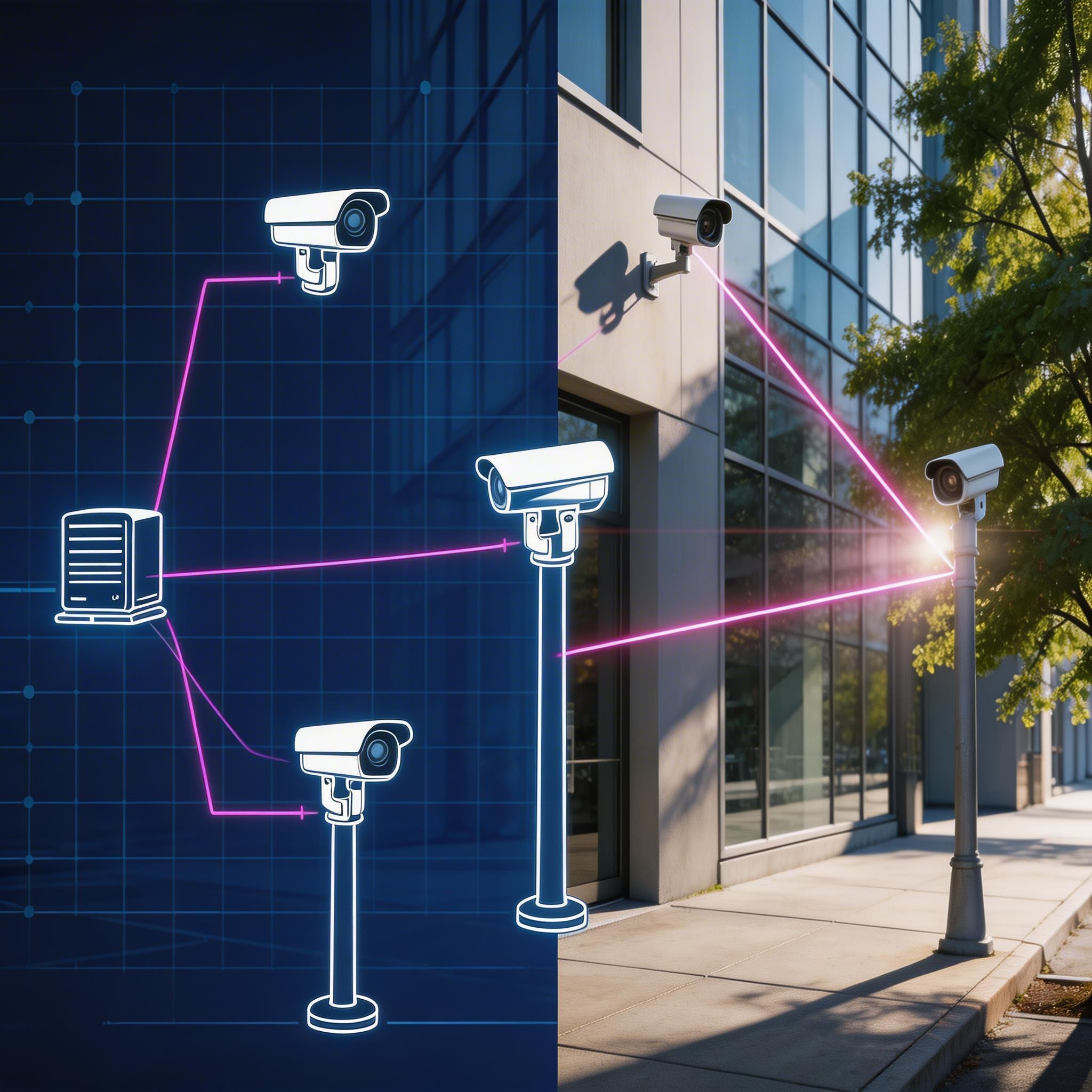
Most security systems don’t fail at install. They fail at design.
Most integrators don’t think of themselves as designing broken systems.
But it happens more often than anyone wants to admit.
A system gets installed. Everything is online. Cameras are recording. On paper, it works.
Then something actually happens. That’s when the cracks show. A key area isn’t covered. Footage isn’t usable. A camera angle misses what matters.
The issue usually isn’t the hardware.
It’s the design.
Today, most video surveillance and security systems are still designed using disconnected tools, with very little ability to validate camera placement, coverage, or real-world performance before installation. That’s where problems start.
Security system design still happens in disconnected tools
If you look at how most systems are designed today, it is not a single workflow. It is a patchwork.
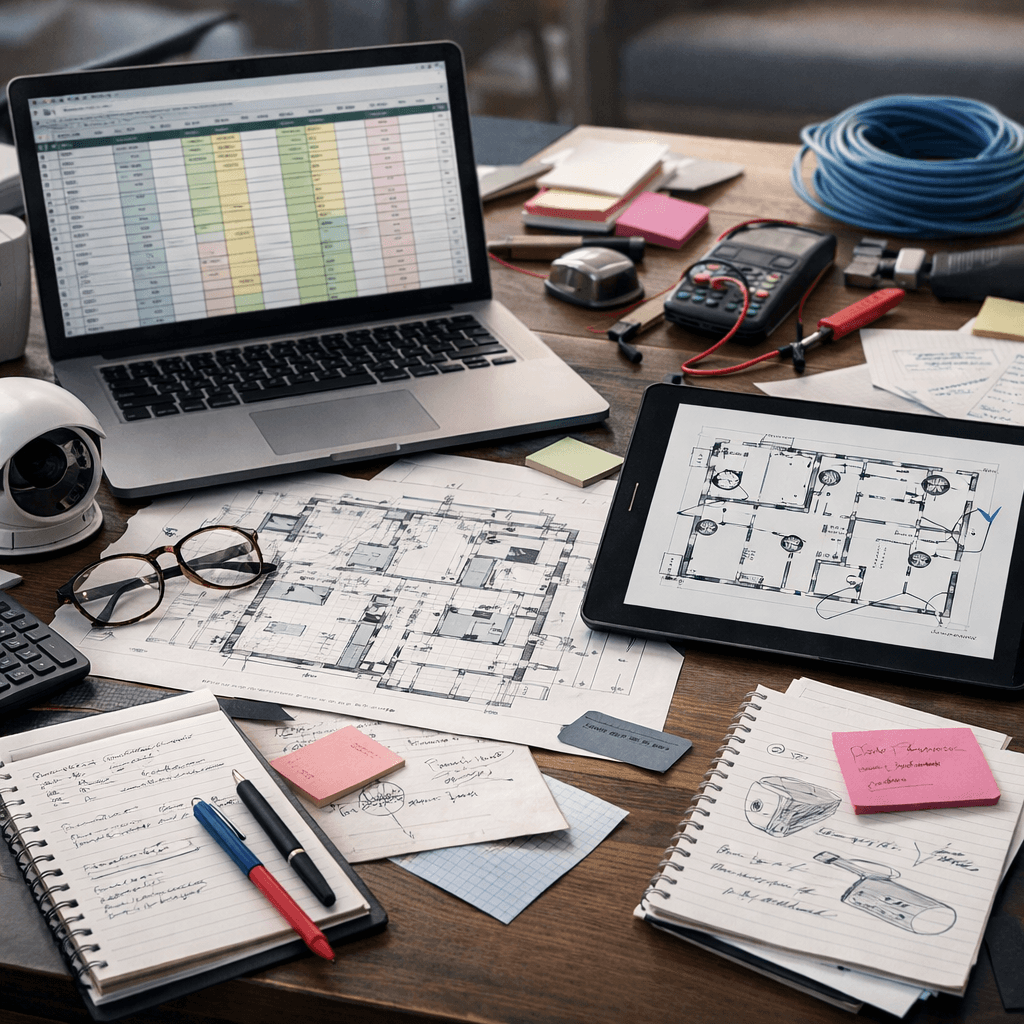
Part of the design lives in a PDF drawing. Device counts and infrastructure decisions are tracked in spreadsheets. Camera coverage is estimated using vendor tools or spec sheets. Feedback and revisions happen over email.
Individually, these tools work. Together, they do not.
There is no shared environment where everything comes together. No single place to understand how decisions impact the full system.
So design becomes fragmented. Each piece might make sense on its own, but there is no way to truly validate how it performs as a whole.
Why camera placement and coverage planning often fall short
Camera placement is one of the most critical parts of any surveillance system. It is also one of the least validated.
Even experienced designers rely heavily on estimation. Field of view is based on manufacturer specs. Coverage is visualized mentally or through static diagrams. Placement decisions are shaped by experience and best guesses.
Real-world environments introduce variables that do not show up in those tools.
Lighting changes throughout the day. Objects block sightlines. Installation constraints shift mounting positions. What looks like full coverage in a design often turns into partial visibility in reality.
The result is a system that appears complete, but does not consistently capture what it needs to.
The lack of validation in security system design
One of the biggest gaps in traditional security system design software and workflows is validation.
Most designs are not truly tested before installation. They are reviewed, discussed, and approved, but not validated in a way that reflects real-world conditions.
That means integrators do not fully know if coverage is complete, if blind spots exist, or if camera angles achieve the intended outcome until the system is already deployed.
At that point, fixing issues requires time, labor, and difficult conversations with customers. What could have been solved during design turns into rework in the field.
The design to install gap creates downstream problems
Even when a design is well thought out, it rarely translates perfectly to installation.
The install team is working from drawings and notes, often without the full context behind each decision. Why a camera was placed a certain way. What it was meant to capture. What tradeoffs were considered.
So adjustments get made in the field.
A camera gets moved slightly. A mounting location changes. Infrastructure constraints force small deviations.
Those changes are reasonable in isolation, but over the course of a project, they add up. By the end, the installed system can be meaningfully different from the original design.
That gap is where performance issues often begin.
Why traditional approaches no longer work
For years, this process was good enough.
But security systems have changed.
There are more devices, more complexity, and higher expectations around performance. Video is not just recorded. It is analyzed. Systems are not centralized. They are distributed across multiple sites and environments.
The margin for error is smaller.
A missed angle or blind spot is not just an inconvenience. It can mean missed events, failed investigations, and loss of trust.
The old approach to video surveillance system design was not built for this level of complexity.
What modern security system design needs to look like
The problem is not effort. It is visibility.
Design needs to move beyond static drawings and disconnected tools into something that reflects the real world.
Integrators need the ability to design within the actual environment, place cameras and infrastructure in context, understand what coverage will realistically look like, and validate decisions before installation begins.
The goal is not just to create a design that looks correct.
It is to create a system that works.
EyeOTplanner: security system design software built for real-world validation
EyeOTplanner is a security system design software platform built to solve this exact problem.
Instead of relying on assumptions, it allows integrators to design systems within real-world environments, including detailed spatial representations. Cameras and devices can be placed in context, giving a clear understanding of coverage and potential blind spots before anything is installed.
This approach connects design, installation, and operations into a single workflow. The system that gets approved is far closer to the system that gets deployed and ultimately performs in the field.
By shifting design from estimation to validation, integrators can reduce rework, improve outcomes, and deliver systems that meet expectations from day one.
The bottom line
Most security system issues do not start during installation.
They start during design.
As long as security system design relies on disconnected tools, assumptions, and limited validation, those issues will continue to show up downstream.
That is starting to change.
The teams that adapt their design process now will be the ones delivering more reliable, scalable, and effective systems going forward.
Most security systems don’t fail at install. They fail at design.
Most integrators don’t think of themselves as designing broken systems.
But it happens more often than anyone wants to admit.
A system gets installed. Everything is online. Cameras are recording. On paper, it works.
Then something actually happens. That’s when the cracks show. A key area isn’t covered. Footage isn’t usable. A camera angle misses what matters.
The issue usually isn’t the hardware.
It’s the design.
Today, most video surveillance and security systems are still designed using disconnected tools, with very little ability to validate camera placement, coverage, or real-world performance before installation. That’s where problems start.
Security system design still happens in disconnected tools
If you look at how most systems are designed today, it is not a single workflow. It is a patchwork.
Part of the design lives in a PDF drawing. Device counts and infrastructure decisions are tracked in spreadsheets. Camera coverage is estimated using vendor tools or spec sheets. Feedback and revisions happen over email.
Individually, these tools work. Together, they do not.
There is no shared environment where everything comes together. No single place to understand how decisions impact the full system.
So design becomes fragmented. Each piece might make sense on its own, but there is no way to truly validate how it performs as a whole.
Why camera placement and coverage planning often fall short
Camera placement is one of the most critical parts of any surveillance system. It is also one of the least validated.
Even experienced designers rely heavily on estimation. Field of view is based on manufacturer specs. Coverage is visualized mentally or through static diagrams. Placement decisions are shaped by experience and best guesses.
Real-world environments introduce variables that do not show up in those tools.
Lighting changes throughout the day. Objects block sightlines. Installation constraints shift mounting positions. What looks like full coverage in a design often turns into partial visibility in reality.
The result is a system that appears complete, but does not consistently capture what it needs to.
The lack of validation in security system design
One of the biggest gaps in traditional security system design software and workflows is validation.
Most designs are not truly tested before installation. They are reviewed, discussed, and approved, but not validated in a way that reflects real-world conditions.
That means integrators do not fully know if coverage is complete, if blind spots exist, or if camera angles achieve the intended outcome until the system is already deployed.
At that point, fixing issues requires time, labor, and difficult conversations with customers. What could have been solved during design turns into rework in the field.
The design to install gap creates downstream problems
Even when a design is well thought out, it rarely translates perfectly to installation.
The install team is working from drawings and notes, often without the full context behind each decision. Why a camera was placed a certain way. What it was meant to capture. What tradeoffs were considered.
So adjustments get made in the field.
A camera gets moved slightly. A mounting location changes. Infrastructure constraints force small deviations.
Those changes are reasonable in isolation, but over the course of a project, they add up. By the end, the installed system can be meaningfully different from the original design.
That gap is where performance issues often begin.
Why traditional approaches no longer work
For years, this process was good enough.
But security systems have changed.
There are more devices, more complexity, and higher expectations around performance. Video is not just recorded. It is analyzed. Systems are not centralized. They are distributed across multiple sites and environments.
The margin for error is smaller.
A missed angle or blind spot is not just an inconvenience. It can mean missed events, failed investigations, and loss of trust.
The old approach to video surveillance system design was not built for this level of complexity.
What modern security system design needs to look like
The problem is not effort. It is visibility.
Design needs to move beyond static drawings and disconnected tools into something that reflects the real world.
Integrators need the ability to design within the actual environment, place cameras and infrastructure in context, understand what coverage will realistically look like, and validate decisions before installation begins.
The goal is not just to create a design that looks correct.
It is to create a system that works.
EyeOTplanner: security system design software built for real-world validation
EyeOTplanner is a security system design software platform built to solve this exact problem.
Instead of relying on assumptions, it allows integrators to design systems within real-world environments, including detailed spatial representations. Cameras and devices can be placed in context, giving a clear understanding of coverage and potential blind spots before anything is installed.
This approach connects design, installation, and operations into a single workflow. The system that gets approved is far closer to the system that gets deployed and ultimately performs in the field.
By shifting design from estimation to validation, integrators can reduce rework, improve outcomes, and deliver systems that meet expectations from day one.
The bottom line
Most security system issues do not start during installation.
They start during design.
As long as security system design relies on disconnected tools, assumptions, and limited validation, those issues will continue to show up downstream.
That is starting to change.
The teams that adapt their design process now will be the ones delivering more reliable, scalable, and effective systems going forward.
See EyeOTmonitor in Action
Get real-time visibility into your entire security system. Walk through the platform with our team and see how it fits your environment.
Image Health
Infrastructure Monitoring
Discovery & Mapping
Analytics
Integrations
Resources
Get Started
Pricing
© 2026 by EyeOTmonitor


See EyeOTmonitor in Action
Get real-time visibility into your entire security system. Walk through the platform with our team and see how it fits your environment.
Image Health
Infrastructure Monitoring
Discovery & Mapping
Analytics
Integrations
Resources
Get Started
Pricing
© 2026 by EyeOTmonitor
See EyeOTmonitor in Action
Get real-time visibility into your entire security system. Walk through the platform with our team and see how it fits your environment.
Image Health
Infrastructure Monitoring
Discovery & Mapping
Analytics
Solutions
By Role
Regional ISPs
Systems Integrators
MSPs
Integrations
Resources
Get Started
Pricing
© 2026 by EyeOTmonitor