Monitoring Security Systems Across Large-Scale Deployments
Blog
•
7 minute read
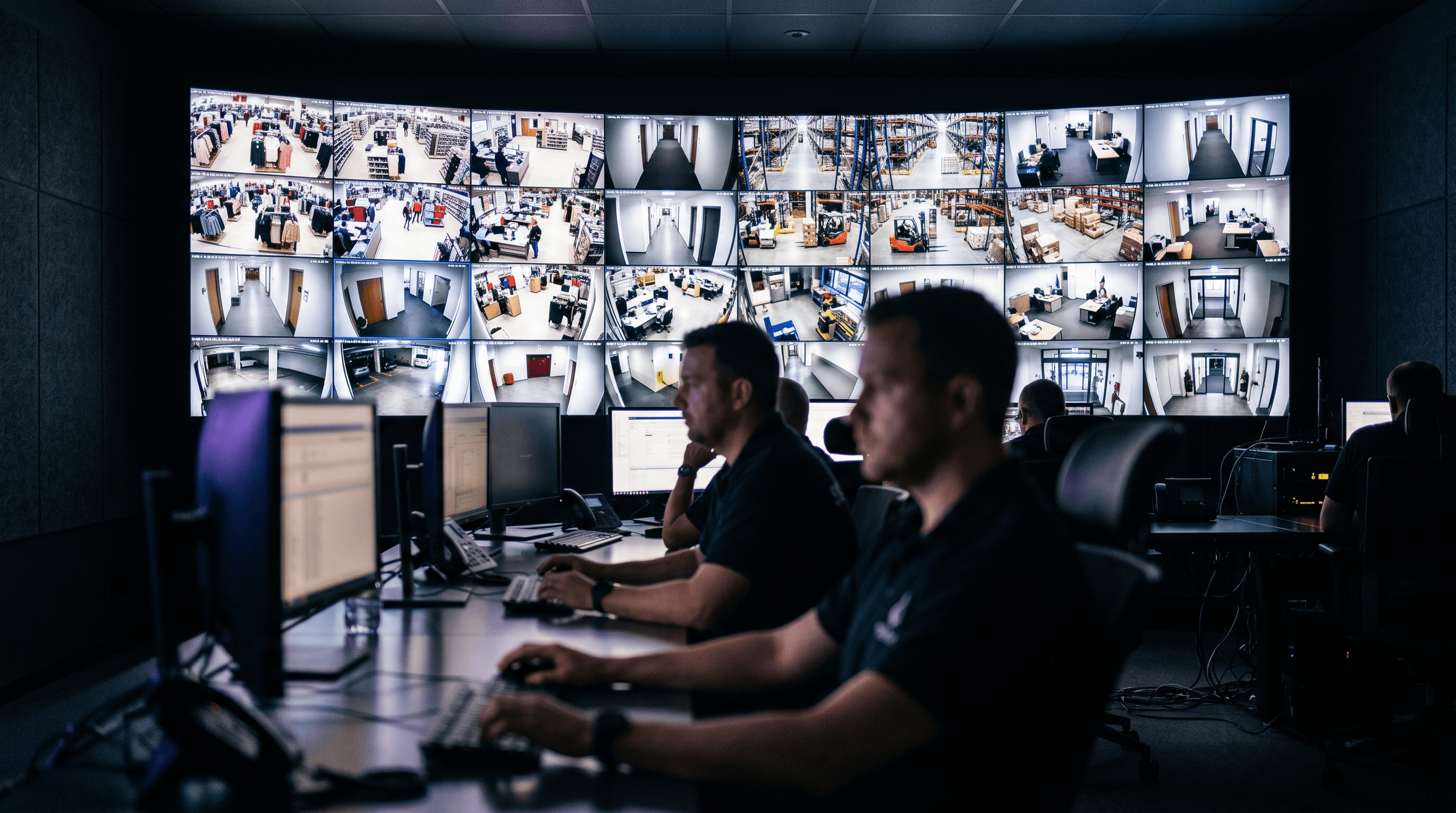
When people talk about security system monitoring, they’re usually thinking about a single building or campus.
A few cameras. A recorder. Maybe a switch or two.
At that scale, problems are visible. If something breaks, someone notices. If a camera goes down, it gets reported. If recording fails, it’s usually caught within a reasonable amount of time.
Now take that same model and apply it to a distributed environment with dozens, hundreds, or even thousands of locations.
Everything changes.
The challenge of distributed camera systems
Large-scale security deployments are rarely designed as one unified system from the start. They evolve over time, often through expansion, acquisitions, or phased rollouts.
A retail chain adds new stores.
A logistics company expands into new regions.
A healthcare network brings new facilities online.
Each location introduces new variables. Different camera brands. Different network setups. Different installation standards. Different VMS platforms.
What you end up with is a distributed camera system that lacks consistency and, more importantly, lacks visibility.
From an operations standpoint, this is where things begin to break down.
Why multi-site monitoring becomes difficult
Monitoring a single site is relatively straightforward because everything is contained within one environment. Monitoring multiple sites introduces fragmentation.
Each location becomes its own silo.
There may be separate logins for different VMS platforms. Network monitoring might live in another tool. Camera health checks might be manual or nonexistent. Documentation is often outdated or incomplete.
When an issue occurs, there is no single source of truth.
Teams are forced to jump between systems, trying to piece together what’s happening. That process slows everything down and increases the likelihood that issues go unresolved for longer than they should.
Over time, this creates operational blind spots.
The hidden risks of large-scale security monitoring
The biggest risk in large-scale security monitoring is not total system failure. It’s silent degradation.
Cameras don’t always go offline. They stay online but stop being useful.
An image slowly goes out of focus.
Lighting conditions change and create glare.
A camera becomes partially obstructed.
A timestamp drifts out of sync.
From a traditional monitoring perspective, everything looks fine. The device is online. The stream is active.
But the outcome is compromised.
When footage is needed, that’s when the problem is discovered. And by then, it’s too late.
This is one of the most common and costly failures in distributed camera systems.
Why traditional tools fall short
Most monitoring tools were not built for physical security environments at scale.
IT monitoring platforms focus on uptime, latency, and device availability. They are useful for network
health, but they lack context around video systems.
VMS platforms provide alerts, but they are typically limited to events within that specific system. They do not account for network dependencies, storage performance, or cross-site visibility.
Manual processes, such as periodic checks or technician audits, do not scale. They are time-consuming and prone to gaps.
The result is a fragmented monitoring strategy where no single tool provides a complete picture.
What effective enterprise security monitoring looks like
To effectively monitor security systems across large-scale deployments, organizations need to move beyond device-level monitoring and adopt a system-level approach.
This starts with centralized visibility.
Every site, every camera, every server, and every network device should be visible in a single interface. Without this, teams are always operating with incomplete information.
It also requires understanding dependencies.
A camera is not an isolated device. It relies on network connectivity, switching infrastructure, storage systems, and VMS platforms. When one component fails, it often impacts multiple parts of the system.
Without visibility into those relationships, troubleshooting becomes guesswork.
The role of topology and digital twin environments
One of the most effective ways to manage large-scale security environments is through topology mapping and digital twin representations.
A digital twin creates a real-time model of the entire system, showing how devices are connected and how they interact.
Instead of looking at a list of devices, operators can see the full architecture.
They can trace a problem from a camera to a switch to a server to a storage system. They can identify bottlenecks, failures, and dependencies quickly.
This approach reduces mean time to resolution and allows teams to be more proactive.
Why image-level monitoring matters
In distributed camera systems, uptime is not enough.
A camera being online does not guarantee that it is delivering usable video.
Image-level monitoring introduces a different layer of validation. It focuses on whether the video being captured meets operational requirements.
This includes detecting issues such as blur, obstruction, lighting changes, and scene anomalies.
At scale, this becomes critical.
Without automated image validation, organizations are relying on chance to catch these issues. With it, they can continuously verify that their systems are performing as expected.
Scaling operations without scaling headcount
One of the biggest challenges in enterprise security monitoring is scale.
As the number of sites increases, the complexity increases exponentially.
Adding more personnel is not always a viable solution. It increases cost and often does not solve the underlying inefficiencies.
Instead, organizations are focusing on automation and intelligent workflows.
Automated discovery reduces the time required to onboard new sites.
Automated mapping eliminates the need for manual diagrams.
Contextual alerting reduces noise and highlights what actually matters.
These capabilities allow smaller teams to manage larger environments more effectively.
The shift toward proactive monitoring
The traditional model of security monitoring is reactive.
Something breaks, and then it gets fixed.
At scale, this approach leads to constant firefighting.
A more effective model is proactive monitoring.
This means identifying issues before they impact operations. It means having visibility into trends, patterns, and early indicators of failure.
It also means having the tools to act quickly when something does go wrong.
Proactive monitoring is not just about technology. It is about changing how teams operate.
Final thoughts on large-scale security system monitoring
Monitoring security systems across large-scale deployments requires a different mindset.
It is no longer about checking if devices are online. It is about understanding system performance, dependencies, and outcomes.
Distributed camera systems introduce complexity, but they also create an opportunity to improve how security operations are managed.
Organizations that invest in centralized visibility, system-level monitoring, and automation are better positioned to scale without losing control.
Because at the end of the day, the goal is not just to have a system that is running.
It is to have a system that is working exactly as expected, across every site, every device, and every moment that matters.
When people talk about security system monitoring, they’re usually thinking about a single building or campus.
A few cameras. A recorder. Maybe a switch or two.
At that scale, problems are visible. If something breaks, someone notices. If a camera goes down, it gets reported. If recording fails, it’s usually caught within a reasonable amount of time.
Now take that same model and apply it to a distributed environment with dozens, hundreds, or even thousands of locations.
Everything changes.
The challenge of distributed camera systems
Large-scale security deployments are rarely designed as one unified system from the start. They evolve over time, often through expansion, acquisitions, or phased rollouts.
A retail chain adds new stores.
A logistics company expands into new regions.
A healthcare network brings new facilities online.
Each location introduces new variables. Different camera brands. Different network setups. Different installation standards. Different VMS platforms.
What you end up with is a distributed camera system that lacks consistency and, more importantly, lacks visibility.
From an operations standpoint, this is where things begin to break down.
Why multi-site monitoring becomes difficult
Monitoring a single site is relatively straightforward because everything is contained within one environment. Monitoring multiple sites introduces fragmentation.
Each location becomes its own silo.
There may be separate logins for different VMS platforms. Network monitoring might live in another tool. Camera health checks might be manual or nonexistent. Documentation is often outdated or incomplete.
When an issue occurs, there is no single source of truth.
Teams are forced to jump between systems, trying to piece together what’s happening. That process slows everything down and increases the likelihood that issues go unresolved for longer than they should.
Over time, this creates operational blind spots.
The hidden risks of large-scale security monitoring
The biggest risk in large-scale security monitoring is not total system failure. It’s silent degradation.
Cameras don’t always go offline. They stay online but stop being useful.
An image slowly goes out of focus.
Lighting conditions change and create glare.
A camera becomes partially obstructed.
A timestamp drifts out of sync.
From a traditional monitoring perspective, everything looks fine. The device is online. The stream is active.
But the outcome is compromised.
When footage is needed, that’s when the problem is discovered. And by then, it’s too late.
This is one of the most common and costly failures in distributed camera systems.
Why traditional tools fall short
Most monitoring tools were not built for physical security environments at scale.
IT monitoring platforms focus on uptime, latency, and device availability. They are useful for network
health, but they lack context around video systems.
VMS platforms provide alerts, but they are typically limited to events within that specific system. They do not account for network dependencies, storage performance, or cross-site visibility.
Manual processes, such as periodic checks or technician audits, do not scale. They are time-consuming and prone to gaps.
The result is a fragmented monitoring strategy where no single tool provides a complete picture.
What effective enterprise security monitoring looks like
To effectively monitor security systems across large-scale deployments, organizations need to move beyond device-level monitoring and adopt a system-level approach.
This starts with centralized visibility.
Every site, every camera, every server, and every network device should be visible in a single interface. Without this, teams are always operating with incomplete information.
It also requires understanding dependencies.
A camera is not an isolated device. It relies on network connectivity, switching infrastructure, storage systems, and VMS platforms. When one component fails, it often impacts multiple parts of the system.
Without visibility into those relationships, troubleshooting becomes guesswork.
The role of topology and digital twin environments
One of the most effective ways to manage large-scale security environments is through topology mapping and digital twin representations.
A digital twin creates a real-time model of the entire system, showing how devices are connected and how they interact.
Instead of looking at a list of devices, operators can see the full architecture.
They can trace a problem from a camera to a switch to a server to a storage system. They can identify bottlenecks, failures, and dependencies quickly.
This approach reduces mean time to resolution and allows teams to be more proactive.
Why image-level monitoring matters
In distributed camera systems, uptime is not enough.
A camera being online does not guarantee that it is delivering usable video.
Image-level monitoring introduces a different layer of validation. It focuses on whether the video being captured meets operational requirements.
This includes detecting issues such as blur, obstruction, lighting changes, and scene anomalies.
At scale, this becomes critical.
Without automated image validation, organizations are relying on chance to catch these issues. With it, they can continuously verify that their systems are performing as expected.
Scaling operations without scaling headcount
One of the biggest challenges in enterprise security monitoring is scale.
As the number of sites increases, the complexity increases exponentially.
Adding more personnel is not always a viable solution. It increases cost and often does not solve the underlying inefficiencies.
Instead, organizations are focusing on automation and intelligent workflows.
Automated discovery reduces the time required to onboard new sites.
Automated mapping eliminates the need for manual diagrams.
Contextual alerting reduces noise and highlights what actually matters.
These capabilities allow smaller teams to manage larger environments more effectively.
The shift toward proactive monitoring
The traditional model of security monitoring is reactive.
Something breaks, and then it gets fixed.
At scale, this approach leads to constant firefighting.
A more effective model is proactive monitoring.
This means identifying issues before they impact operations. It means having visibility into trends, patterns, and early indicators of failure.
It also means having the tools to act quickly when something does go wrong.
Proactive monitoring is not just about technology. It is about changing how teams operate.
Final thoughts on large-scale security system monitoring
Monitoring security systems across large-scale deployments requires a different mindset.
It is no longer about checking if devices are online. It is about understanding system performance, dependencies, and outcomes.
Distributed camera systems introduce complexity, but they also create an opportunity to improve how security operations are managed.
Organizations that invest in centralized visibility, system-level monitoring, and automation are better positioned to scale without losing control.
Because at the end of the day, the goal is not just to have a system that is running.
It is to have a system that is working exactly as expected, across every site, every device, and every moment that matters.
See EyeOTmonitor in Action
Get real-time visibility into your entire security system. Walk through the platform with our team and see how it fits your environment.
Image Health
Infrastructure Monitoring
Discovery & Mapping
Analytics
Integrations
Resources
Get Started
Pricing
© 2026 by EyeOTmonitor


See EyeOTmonitor in Action
Get real-time visibility into your entire security system. Walk through the platform with our team and see how it fits your environment.
Image Health
Infrastructure Monitoring
Discovery & Mapping
Analytics
Integrations
Resources
Get Started
Pricing
© 2026 by EyeOTmonitor
See EyeOTmonitor in Action
Get real-time visibility into your entire security system. Walk through the platform with our team and see how it fits your environment.
Image Health
Infrastructure Monitoring
Discovery & Mapping
Analytics
Solutions
By Role
Regional ISPs
Systems Integrators
MSPs
Integrations
Resources
Get Started
Pricing
© 2026 by EyeOTmonitor